Foreign investors rarely enter the Philippines without first evaluating PEZA zones. The incentives are clear.
- Export advantages
- Tax efficiency
- infrastructure readiness
- Logistics accessibility
- Regulatory support
Yet many organizations underestimate what it takes to build inside these environments successfully.
Understanding PEZA building requirements in the Philippines early protects both schedule certainty and investment continuity.
Executives who treat compliance as a checklist often discover that PEZA construction operates differently from standard commercial development.
Factories inside export zones must perform structurally, operationally, and administratively at a higher level.
PEZA Facilities Must Support Export-Oriented Production Environments
PEZA zones exist to support manufacturing reliability. Buildings constructed inside them must reflect that purpose.
Structural planning must support equipment installation readiness from the beginning. Utility routing must anticipate industrial consumption levels. Site access must support logistics continuity.
Facilities that meet minimum building code compliance may still require redesign inside export zones.
Executives planning facility construction should approach PEZA environments as operational ecosystems rather than real estate opportunities.
Documentation Accuracy Determines Approval Speed
Permitting delays rarely result from incomplete ambition. They result from incomplete documentation alignment.
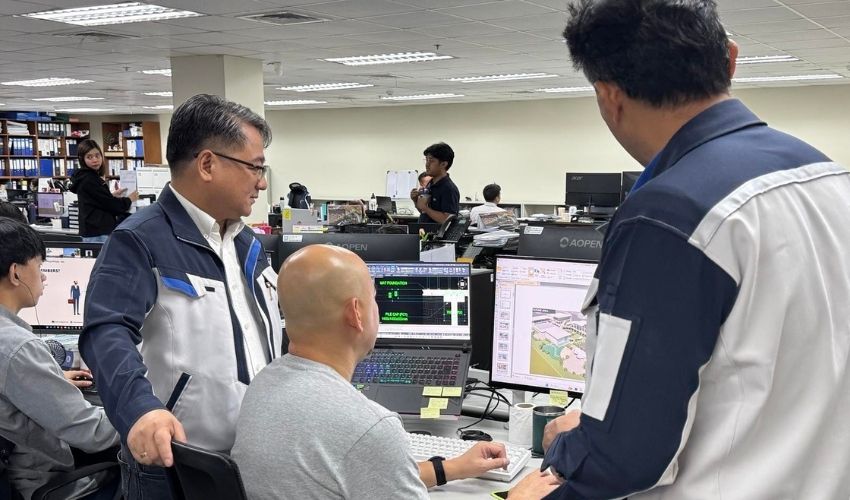
Engineering submissions inside PEZA zones must demonstrate coordination between architectural plans, structural design assumptions, mechanical routing strategy, and site infrastructure compatibility.
When documentation reflects integrated planning, approval timelines accelerate. When documentation reflects fragmented preparation, revisions extend schedules.
Disciplined engineering coordination supports Fast Turnaround approval performance long before construction begins.
Structural Compliance Requirements Reflect Industrial Risk Profiles
Export facilities support production assets with global value chains behind them.
Structural expectations therefore extend beyond standard occupancy considerations.
Load-bearing capacity must anticipate machinery density. Floor performance must support automated systems. Foundation detailing must protect alignment-sensitive installations.
Facilities engineered with Seismic Resistant strategies meet both operational continuity expectations and compliance expectations simultaneously.
Executives planning long-term export production benefit from recognizing this alignment early.
QA QC Frameworks Support Regulatory Confidence
Regulators evaluate more than drawings.
They evaluate execution reliability.
Structured construction QA QC Philippines systems demonstrate that engineering intent translates into field accuracy.
Inspection documentation confirms reinforcement placement consistency. Concrete performance validation confirms slab reliability. Structural installation records confirm alignment integrity.
These frameworks support regulatory confidence throughout the construction process. They also support smoother commissioning readiness later.
ISO-Aligned Construction Systems Simplify Multinational Approvals
Many export-zone investors operate under global engineering governance frameworks.
Facilities executed under ISO construction standards Philippines methodology integrate more easily into international compliance environments.
Documentation compatibility improves Inspection transparency improves
Engineering traceability improves
Executives responsible for regional manufacturing portfolios often prioritize contractors capable of supporting these expectations from the beginning.
Construction Inspection Processes Protect Commissioning Timelines
Inspection systems inside PEZA environments operate differently from standard commercial inspections. They verify production readiness.
A disciplined construction inspection process in The Philippines confirms:
equipment foundation accuracy floor tolerance readiness
utility corridor alignment
structural clearance reliability
Inspection readiness protects commissioning schedules.
Executives planning production launch windows depend on these confirmations.
Utility Coordination Determines Operational Success
PEZA facilities depend heavily on coordinated infrastructure access.
Electrical load availability water supply integration
telecommunications redundancy waste management routing
transport logistics access
Engineering teams that coordinate utilities early reduce approval delays later.
Facilities prepared this way consistently achieve On-Time Completion performance across export-zone construction schedules.
Structural Reliability Supports Incentive Continuity
Tax incentives depend on operational continuity.
Production interruptions reduce export consistency.
Structural reliability therefore influences more than engineering performance. It influences investment performance.
Facilities delivered under Japanese Quality construction methodology maintain dimensional precision, documentation clarity, and installation readiness that support uninterrupted operations inside export environments.
Executives responsible for long-term export production recognize this advantage quickly.
Contractor Selection Determines Approval Experience
Many organizations assume PEZA approval complexity comes from regulatory structure. In practice, approval experience depends heavily on contractor preparation quality.
Integrated engineering teams anticipate documentation expectations early. Coordinated structural planning supports faster review cycles.
Disciplined inspection systems support smoother validation stages.
Facilities delivered under structured execution frameworks consistently move through approval phases with fewer revisions.
Export-Oriented Facilities Require Construction Partners Who Understand Industrial Reality
Factories inside PEZA zones operate differently from commercial developments outside them.
They support precision manufacturing, high-value equipment installation, export compliance documentation, and continuous logistics activity.
Contractors experienced in industrial environments recognize these requirements early and plan accordingly.
This alignment supports Fast Turnaround, protects On-Time Completion, and ensures facilities meet both regulatory expectations and operational expectations from the first day of production.
Companies entering the Philippines through PEZA environments benefit most when the construction’s strategy reflects this reality from the beginning.
Building inside PEZA environments requires more than just compliance, it requires coordination between engineering, documentation, utilities, and construction sequencing that supports export-ready operations from day one. CCT
Constructors Corporation supports foreign investors with facilities delivered under Japanese Quality standards, designed with Seismic Resistant performance, and executed through fast turnaround schedules that protect approval timelines and commissioning targets. With a strong record of On-Time Completion certainty across industrial developments, CCT provides the confidence multinational manufacturers need when establishing production inside the Philippines. When
regulatory readiness and operational readiness must move together, experience becomes the deciding factor.